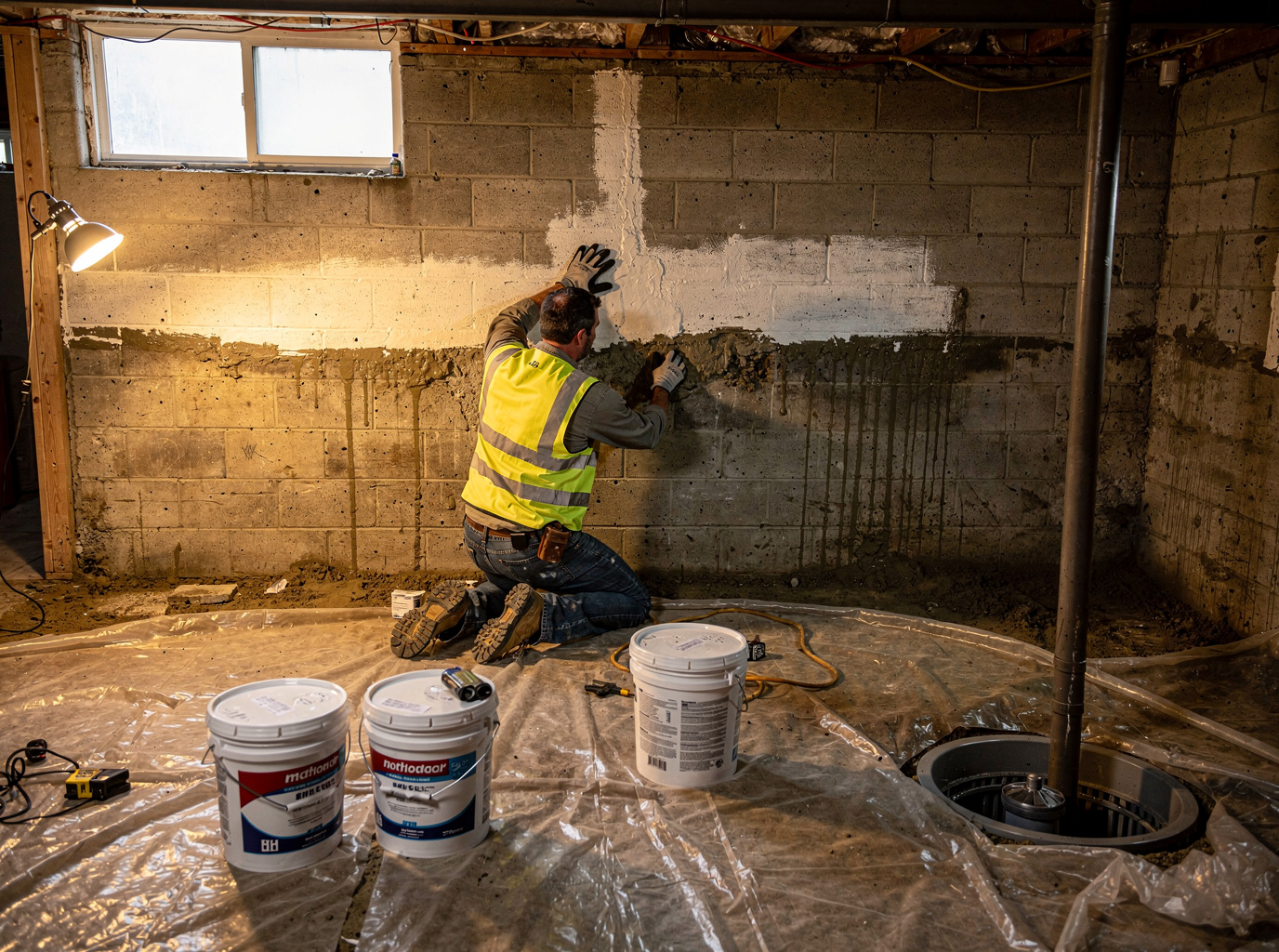
Warren’s housing stock, especially in Downtown Warren and Howland, features many pre-1960 homes with poured concrete or block walls set against heavy Trumbull County clay. These walls take repeated freeze-thaw stress from the humid continental winters, opening hairline cracks that let groundwater in during spring thaws. Exterior excavation is often required on the north-facing sides where snow lingers longest, and proper drainage must tie into existing storm lines that run toward the Mahoning River corridor.
Interior solutions such as crack injection with polyurethane or epoxy work well when access is limited by narrow lots near Warren City Hall or the Trumbull County Courthouse. However, homes in Northwest Warren and Lordstown frequently need exterior wall coating plus a dimple membrane because the water table rises quickly after heavy summer storms. Skipping the membrane on clay soils leads to recurring seepage within two seasons.
We always check for radon vent paths and electrical grounding before any excavation near Packard Music Hall or the Warren G. Harding Home district, where older services run close to foundations. Cold-weather application requires heated enclosures so coatings cure properly before temperatures drop below freezing at night.
Technician insight
In Warren, the thing that catches most people out with Basement Walls Waterproofing is how quickly the clay backfill against pre-1960 block walls expands during the first hard freeze after a wet November. Homeowners in Howland and Northwest Warren often think a coat of sealant on the inside will hold, but the pressure from frozen ground pushes the wall inward before spring even arrives.
Downtown Warren Block Wall Seepage
A 1948 home near Warren City Hall showed recurring water along the east basement wall after every thaw. Excavation revealed the original parging had failed and clay soil was holding water against the block. We installed exterior coating plus dimple membrane, tied a short drain line to the existing storm lateral, and restored the narrow side yard. No further seepage occurred the following winter.
Basement Walls Waterproofing Services We Offer
✓Exterior Wall Excavation and Coating
Dig down to the footing on affected walls, apply rubberized asphalt coating, and install dimple membrane to handle Trumbull County clay expansion.
✓Interior Crack Injection
Inject flexible polyurethane into active cracks in block or poured walls common in Downtown Warren homes built before 1950.
✓Wall Vapor Barrier Installation
Attach sealed vapor barrier to interior walls in Lordstown and Howland basements to stop moisture migration during humid summers.
✓French Drain Tie-In for Walls
Extend perimeter drains to redirect water away from basement walls on sloped lots near Niles and Girard.
✓Sump Pump Integration with Wall Systems
Install or upgrade sump pumps connected to wall waterproofing to manage spring thaw volumes in older Warren foundations.
How it works
- 1
Site Assessment
Walk the basement and exterior, note crack locations, soil type, and proximity to storm drains in neighborhoods like Howland or Downtown Warren.
- 2
Preparation And Access
Remove landscaping or interior finishes as needed, protect utilities, and set up shoring for safe excavation on older Trumbull County properties.
- 3
Waterproofing Application
Apply chosen system—coating, injection, or membrane—while monitoring temperatures to ensure proper cure during cold winter or warm summer conditions.
- 4
Drainage Connection And Backfill
Tie new drains to existing lines, backfill with gravel, and restore grade so water flows away from the home toward county ditches.
Pricing
Pricing depends on wall length, depth of excavation required, and soil conditions typical in Trumbull County clay areas.